Guideline for Primary Headache = “Can’t See the Forest for the Trees!”
What is headache?
The most common symptoms or signs are fever and headache, aren’t they? What is headache? Headache is classified as primary or secondary headache based on the perspectives of medical practice and the international classification of primary headache (Table 1).
Simply speaking, primary headache means a certain type of headache shown in Table 1 whose cause is still unknown. I feel this classification is like my second title, “Can’t see the forest for the trees.” On the other hand, secondary headache means headache due to a certain disorder in the brain followed by headache, such as a tumor, like glioma or meningioma in the brain, an intracranial arterial aneurysm with bulging of the arterial wall followed by local pain leading to generalized headache, or a certain infection, such as Japanese encephalitis virus infection. Anyway, to summarize primary headache, the three categories are cluster headache, hemicrania, and tension headache, each with detailed subclassifications.
The three localized symptoms are classified as primary headache. Almost all people suffer from them quite frequently, and they are so-called common symptoms. Almost all people think that this is a certain disease, but I propose that there is an explainable cause of primary headache. That is, it is a kind of functional disturbance of the microcirculation of many muscles around the neck area due to the prone position of the head, neck, and back during desk work, computer use, smartphone handling, or playing computer games. In other words, the prone position of the head-neck-back posture is the cause of primary headache. Therefore, the word “primary” is now not necessary, and it should instead be called neck-caused headache or cervicogenic headache.
How “primary headache” occurs
Using Figure 1, I will show you the mechanisms by which primary headache occurs. In Figure 1, you can see three yellow, mini-winding, thread-like structures from the middle part of the neck upward to the margin of the back of the head. These three bundles are three groups of nerve fibers from the cervical spinal cord, spreading over the subcutaneous tissue of the back area to the head and face.
On the other hand, sensation of the face is controlled by the trigeminal (three separate branches) nervous system, which spreads three main branches over the broad area of the face and head skin. The upper branch of the trigeminal nervous system covers the eyes and the front half of the head skin and interacts with the posterior nervous systems mentioned above. This interaction of both nervous systems causes referred pain. The most famous pain or discomfort of the eyes, so-called asthenopia or eye strain, may be caused by the interaction between them due to your prone position of the head. This headache is called cluster headache.
The middle part of the nervous tract of the back of the head, called the great occipital nerve, interacts with the orbital branch of the trigeminal nerve, causing asthenopia.
Migraine causes pain around the temporal area of the head, often with pulsatile pain caused by throbbing of the temporal artery in front of the ear. These symptoms are complicated, but the mechanisms are very simple on the basis of the anatomical sensory nervous systems and nociceptive nervous system.
In accordance with my clinical experience in our clinic, Tokyo Neurological Clinic, only three patients with generalized headache were diagnosed by brain MRI as having a certain type of brain tumor, such as glioma, meningioma, or brain-origin malignant lymphoma. Another patient was diagnosed as having a brain aneurysm of the left vertebral artery. But these four patients were quite unusual among approximately 4,000 outpatients examined by brain MRI over 12 years in my own experience.
Wise choices and recommendations are recommended throughout the world.
The reason why I strongly advise you is based on my own experiences
I would like to present my own experience about headache and other severe symptoms. I managed to recover by my own effort and with some help from others, by controlling my head and neck posture and warming the tissue around the neck, in order to cure the ischemic condition of the microenvironment of the neck muscles and the nervous systems, including the parasympathetic (vagus) and sympathetic nervous systems around the neck affected by the prone position of the head, neck, and trunk. This situation is closely related to my career.
I have been a certified pathologist by the Japanese Society of Pathology for more than fifty years. Pathologists in general usually use a light microscope and provide final diagnoses of biopsied tissues from the stomach, colon, kidney, liver, or prostate, among others. Besides, they are on duty to perform autopsies on patients in hospitals. I performed more than 700 autopsies and final diagnoses. Such a person tends to adopt a prone position because of using light, electron, or fluorescent microscopes from morning till night. I had been such a typical person at Toranomon General Hospital, one of the biggest and most established hospitals in Tokyo, for about 30 years until about a quarter century ago.
After retiring from that hospital, I suffered from neck and left back pain accompanied by headaches, by which I could not lie down on the futon bed, but I was forced to sit on the sofa to sleep at night for several years. It was very hard for me to maintain daily life at that time. While analyzing my condition by whole-body PET, MRI, and other methods, I looked for all kinds of drugs, such as anti-inflammatory and pain-killing drugs. I could not encounter any miracle drug to recover from my devastating condition. Finally, Shuji-Bushimatsu (aconitic acids, a kind of Kampo-yaku) was prescribed to me by one of my medical friends. Unbelievably, it had a fairly good effect in improving microcirculation around my neck. Even a week later, I totally got it! My suffering was gone after taking it for only a month or so. This effect is still a miracle in the world. Unbelievable! And I noticed that my suffering was not due to inflammation! It was due to disturbances of microcirculation around my neck muscular tissues, including various important tissues such as the autonomic nervous systems, caused by my working posture! Thereafter, I had no trouble at all in maintaining the good condition of my head, neck, and trunk. This was my way of treatment.
Now I believe that NKCP is reasonable to be selected and taken to obtain better microcirculation around the neck. Very severe cases of headache and other symptoms are to be treated by Dr. Matsui’s physical therapy, composed of micro-electricity and far-infrared treatment, at the World Neck Academy in the Tokyo Neurological Center.
About 10 years after recovery, I tried to be a general physician for patients who complained of such a terrible situation around the neck in the Tokyo Neuro-Center. I have attended to more than 4,500 patients with headache, depression, and whiplash syndromes for 13 years.
Diagnosis, treatment, and prevention of Primary Headache
Primary headache is due to the prone position (99% of its causes) and can be cured without drugs. Primary headache is due to so-called cervicogenic headache, cervical stiffness syndrome, or whiplash syndrome. Almost all drugs categorized as OTC are basically for anti-inflammatory effects. However, fundamentally speaking, primary headaches are due to contracture of the neck muscles, which become a “straight-neck” deformity, and neck blood vessels, followed by disturbances of microcirculation in the muscles and nerves, leading to complex pains in nervous and muscular tissues and, in addition, nociceptive pains as well. It is important for us to keep a chin-back posture for the head, which weighs 8 pounds, avoiding the heavier effective weight of the head in accordance with prone angles during daytime work, as shown in Figure 2.
As an easy exercise at home, I recommend lying down on the back over a pillow that is only 5 centimeters high, for a couple of minutes, to maintain the posterior curvature of the back. The height of the pillow is recommended as 5 centimeters because of the return of venous blood and lymph by glymphatics (1), including β-amyloid, from the brain to the heart as soon and as much as possible in terms of venous sinus circulation and the new glymphatics in the brain of the intracranial circulatory systems. It is also related to the prevention of dementia. In addition to this, the intake of NKCP is recommended for better recirculation of the neck microenvironment of muscles and nerves, especially the main trunks of the vagus nervous system and sympathetic nervous system. Moreover, intake of BioBran is recommended for immunomodulation to regulate the parasympathetic nervous system by the cross-talk of newly discovered acetylcholine receptors between the vagus nervous system and surface receptors of immune cells, such as monocytes and T lymphocytes (2). If you still feel troubled, you should consult the Neurosurgery Academy for electro-physical therapy for severe cases of whiplash syndrome, orthopedic dysregulation, or new types of depression.
Neck Anatomy and the relationship between the inner ears (vertigo and dizziness) and venous return of the inner cervical veins
There are many important structures and functions in the neck area because of the interrelationship between the head and trunk in terms of motor neuronal, sensory neuronal, circulatory, digestive, and skeletal interactions. In the course of mammalian evolution, the head has been extended to the top and front position by the seven cervical bones and circumscribed by the sophisticated neck muscle group of over thirty small muscles, which enables strong and precise movement controlled by the sensory and efferent nervous systems, for instance, in trying to catch or crush a fly around you. The neck muscle group is very sophisticated in function and naive in controlling the bowed position of the neck. The prone position is a kind of dangerous posture for human beings, so to speak, Homo sapiens, because of the reverse load of the head weight of 8 pounds (4,000 grams) on the frontward curve of the original neck position, the backward curve of the thoracic area, and the frontward curve, again, of the lumbar area. These three curves are what I call the “Bow-Bow Style of Homo sapiens.” This burden of the head falls directly on the trapezius muscles and anatomical sites of three major nerves, such as the great occipital nerve and others as mentioned above. This stretching burden causes pressure on the three major nerves, which are supposed to cause cluster headache, hemicrania, and tension headache over the scalp.
Moreover, the neck causes vertigo or dizziness. The mechanisms of these symptoms are closely related to the lymph volumes of the inner ears and venous return of the inner cervical veins. Jogging is recommended against dizziness to return the venous blood volumes from them.
People with whiplash syndrome have headache as one of the most common symptoms. Looking around the world, headache is one of the most common and most troublesome symptoms in daily life, and drugs against headache are the most commonly used drugs. Nobody disagrees with this opinion. I recommend in this article that almost all people with primary headache should care for their posture during daily life and the duties of daily work in business. Why is that so?
Analysis of causes of Primary Headache
You should imagine yourself at the age of 10. You should look around and easily find a boy or a girl at the age of 10. You should observe the silhouette and easily find that the head is situated on the neck in the center of the head-ball. This silhouette looks like that of a Japanese toy, called “Kendama,” as you see in Figure 3. Nociceptive pains around the neck, like Tsubo in Kampo: In patients with cervical neuromuscular syndrome, the backward area of the neck and the lateral and ventral parts of the neck are sites of nociceptive pain. When doctors push these areas with the thumb or other fingers, patients complain of nociceptive pain at each point. Usually, these areas are called sensitive zones, especially in women. These Tsubo areas are associated with neuralgia or neuritis, and these pains induced by strong pressure are relieved by Matsui’s physical therapy using Silver Spike Point ultra-shortwave electrotherapy.
Summary
No drugs are recommended for primary headache. Anti-inflammatory drugs are not adequate because primary headache is not due to inflammation, but due to insufficient blood supply in the microcirculation in the neck muscular and nervous systems. It is caused by neck contracture to support our heavy head, 8 pounds (4,000 grams). Even more, prone posture increases the effective weight of the head in accordance with the angles of the prone position, such as 5.5 times the weight at 60 degrees from the straight posture (Figure 2). Since the prone test induces a glaucoma-like reaction, we should avoid it. Before easily taking medicines such as anti-inflammatory drugs, daily intake of NKCP for better microcirculation and BioBran are recommended as evidence-based prevention, for improving the microcirculation to an optimal condition of the microenvironment around the neck, including the muscular and nervous systems and the venous return of the large blood volume from the inner ears and from the brain. The final goal of treatment for headache and other general indefinite symptoms of the neck is to control the posture of the silhouette of your head and neck. The prone position should be avoided forever!
Table 1: Classification of headache by the International Headache Society
International Classification of Headache Disorders, third edition: ICHD-3β:
TACs: Trigeminal autonomic cephalalgias
3.1 Cluster headache
3.1.1 Episodic cluster headache
3.1.2 Chronic cluster headache
3.2 Paroxysmal hemicrania
3.2.1 Episodic paroxysmal hemicrania
3.2.2 Chronic paroxysmal hemicrania
3.3 Short-lasting unilateral neuralgiform headache attacks
3.3.1 SUNCT (Short-lasting unilateral neuralgiform headache attacks with conjunctival injection and tearing)
3.3.1.1 Episodic SUNCT
3.3.1.2 Chronic SUNCT
3.3.2 SUNA (Short-lasting unilateral neuralgiform headache attacks with cranial autonomic symptoms)
3.3.2.1 Episodic SUNA
3.3.2.2 Chronic SUNA
3.4 Hemicrania continua
3.4.1 Hemicrania continua, remitting subtype
3.4.2 Hemicrania continua, unremitting subtype
3.5 Probable trigeminal autonomic cephalalgia
3.5.1 Probable cluster headache
3.5.2 Probable paroxysmal hemicrania
3.5.3 Probable short-lasting unilateral neuralgiform headache attacks
3.5.4 Probable hemicrania continua
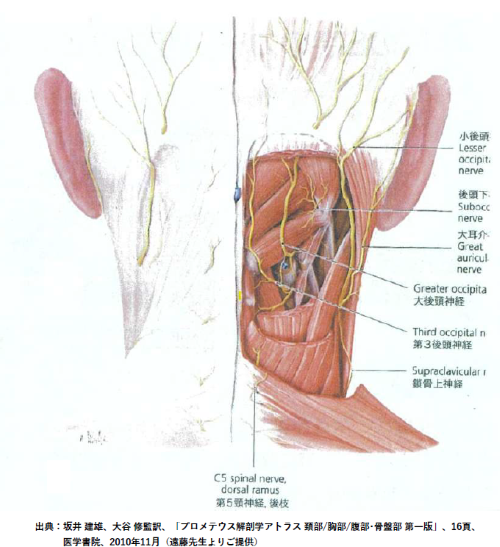
Figure 1: Anatomy of the posterior neck
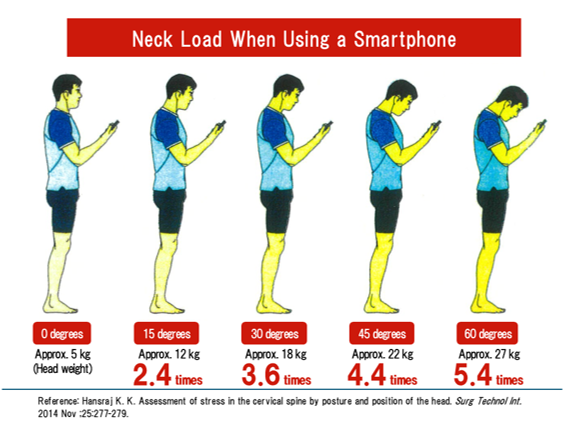
Figure 2: Relationship between the degree of prone position and effective weight
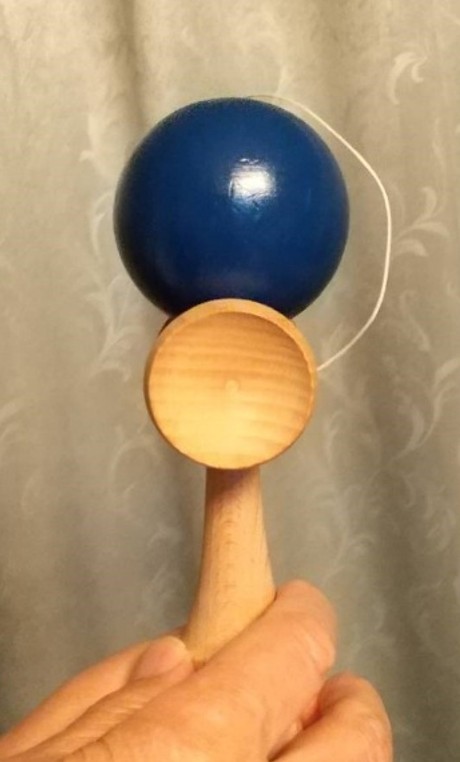
Figure 3: A traditional Japanese toy, Kendama
References:
Aspelund A. et al.: A dual lymphatic vascular system that drains brain interstitial fluid and macromolecules. J Exp Med 2015; 212(7):991-999.
Kawashima K. et al.: Life Sci 2003; 71:2101-2110 (evidence of acetylcholine receptor on macrophages and T lymphocytes as well).
Papers in peer-reviewed international journals:
① Matsui T., … Endo Y., …: Effect of intensive physical therapy on whiplash-associated disorders. BMC Musculoskeletal Disorders. 2019; 20:251-259.
② Matsui T., … Endo Y., …: Cervical muscle diseases are associated with indefinite and various symptoms in the whole body. European Spine Journal. 2020; 29:1013-1021.
③ Matsui T., … Endo Y., …: Possible involvement of the autonomic nervous system in cervical muscles of patients with myalgic encephalomyelitis/chronic fatigue syndrome (ME/CFS). BMC Musculoskeletal Disorders. 2021; 22:419-428.
④ Matsui T., … Endo Y., …: Cervical muscle stiffness and parasympathetic nervous system improvement for treatment of resistant depression. BMC Musculoskeletal Disorders. 2022; 23:907-915.